
How to Learn Piano When You’re Busy: Realistic Practice for Adults

One of the biggest reasons adults put off piano lessons is time.
You might want to learn, but your week is already full. Work runs late. You are tired. Your schedule changes. You might have family commitments, health issues, studying, commuting, or simply not much mental space left by the evening.
So piano becomes one of those things you will do ‘when life calms down’.
The problem is that life does not always calm down. If you wait for the perfect routine, you may never start.
The good news is that adult piano learning does not have to be built around hours of daily practice. It can be built around realistic, focused, flexible practice that actually fits your life.
You do not need a perfect practice routine
A lot of adults imagine that piano progress requires a strict daily schedule.
Of course, regular practice helps. But the best routine is not the most impressive one on paper. It is the one you can actually maintain.
If you plan to practise for an hour every day but manage it twice, you may end up feeling like you have failed. If you plan to practise for ten focused minutes four times a week and actually do it, you are building a real habit.
Consistency does not have to mean perfection.
It means returning to the instrument often enough that your brain and hands keep learning.
Short practice can still be effective
A useful practice session does not need to be long.
Ten minutes can be enough to:
practise one tricky bar slowly
review a rhythm pattern
work on a scale
read a short section hands separately
improve one chord change
listen carefully to tone and evenness
revise a music theory concept
The mistake many people make is assuming that if they cannot practise properly, they should not practise at all.
But a short, focused session is much better than no contact with the instrument.
Small sessions also reduce the emotional resistance to starting. Sitting down for ten minutes feels manageable. Once you begin, you may sometimes do more. But even if you stop after ten minutes, you have still done something valuable.
Focus on one task at a time
Busy adults need efficient practice.
That means avoiding the trap of simply playing a piece from beginning to end and hoping it improves. Playing through can be enjoyable, but it is not always the best use of limited time.
Instead, choose one clear task.
For example:
‘Today I am fixing the rhythm in bars 5–8.’
‘Today I am practising the left hand alone.’
‘Today I am making the first line smoother.’
‘Today I am learning where the notes are in this chord.’
‘Today I am slowing this section down until it feels controlled.’
A specific task gives your brain something to solve. That is where progress happens.
Use a minimum practice plan
A minimum practice plan is the smallest useful version of practice you can do on a difficult day.
For example:
Play one warm-up or scale.
Practise one small section of your piece.
Play one thing you enjoy.
That might take ten to fifteen minutes.
On a better day, you can do more. On a busy day, you still have a structure that keeps you connected to the piano.
This is especially useful for adults because it removes the all-or-nothing mindset. You are not failing because you did not manage a long session. You are maintaining the habit in a realistic way.
Make practice easier to start
If practising requires too many steps, you are less likely to do it.
Try to reduce friction:
keep your music visible
leave your keyboard or piano ready to use
write down exactly what to practise next
use a notebook or practice plan
avoid starting every session by wondering what to do
keep your goals small enough to begin immediately
The easier it is to start, the more often you will start.
This matters more than motivation. Motivation changes. Systems help you keep going when motivation is low.
Online lessons can support flexible learning
Online piano lessons can work well for busy adults because they remove travel time and make lessons easier to fit around real life.
You can learn from home, use your own instrument, and book lessons around your availability. This is especially helpful if your schedule changes from week to week or if travelling to a teacher would make lessons feel like another exhausting commitment.
At Red Squirrel Music, lessons are booked online, and you can choose the length that suits you. A 30-minute lesson might be enough for focused support. A 45-minute lesson may suit regular adult learning. A 60-minute lesson can be useful for deeper work, exam preparation, or combining piano and theory.
The point is not to force music into an unrealistic routine. The point is to build a version of learning that can survive your actual week.
What if I miss practice between lessons?
This happens.
Adults have complicated lives. There may be weeks where you practise less than planned. That does not mean lessons are pointless.
A good lesson can help you restart, reorganise, and make the next step clearer. It can also stop a missed week from turning into a missed month.
If you know you have had a busy week, be honest with your teacher. You can use the lesson to review, troubleshoot, simplify, and rebuild momentum.
You do not need to apologise for being human.
Choose music that suits your capacity
The right music matters.
If you are busy, tired, or easily overwhelmed, pieces that are too difficult can drain your motivation quickly. You may spend all your practice time fighting notes and never get to enjoy the music.
That does not mean you should only play easy music forever. It means your pieces should be chosen carefully.
A good balance might include:
one piece that builds skill
one easier piece that builds fluency
one enjoyable piece that reminds you why you wanted to play
This gives your practice variety and keeps progress from becoming a grind.
Busy adults can still become musical
You do not need to build your musical life around an imaginary perfect schedule.
You can learn piano in small pockets of time. You can make progress slowly and still meaningfully. You can have inconsistent weeks and still keep going. You can be busy and still deserve music in your life.
The important thing is to make the next step small enough to take.
Ready to make piano fit your life?
If you want to learn piano but are worried about time, a free online taster session can help you work out a realistic starting point.
We can talk about your goals, your schedule, your instrument, and the kind of lesson structure that would actually support you.
Book a free online taster session with Red Squirrel Music and start building a piano routine that works around real life.
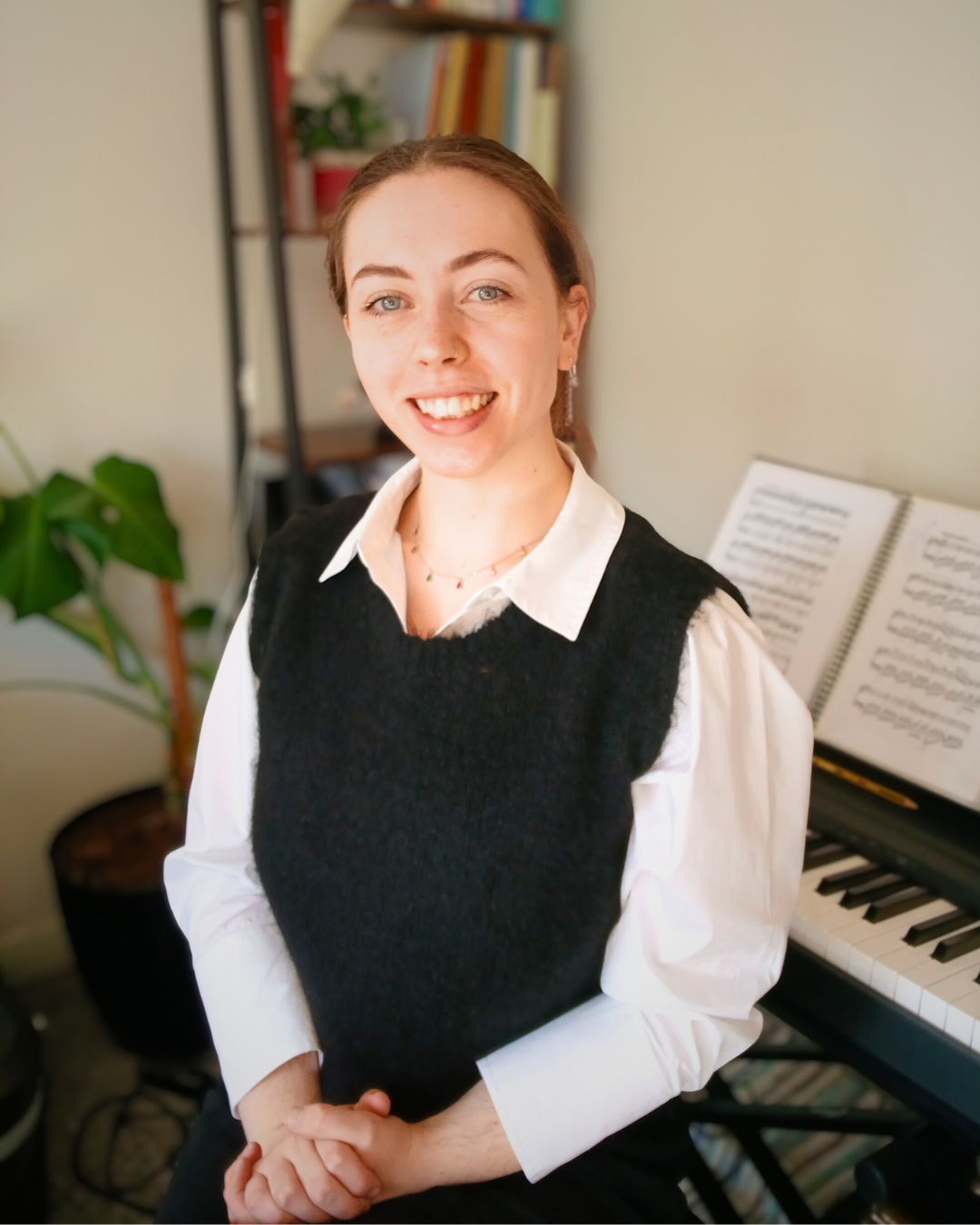
This article was written by Sally Proudman. Sally is a classical pianist, music tutor and founder of Red Squirrel Music, passionate about helping students understand music theory in a way that feels clear, relevant and encouraging.
