
Returning to Piano After Years Away: How to Start Again Without Feeling Rusty
IReturning to piano after years away can feel strangely emotional.
Part of you remembers what it felt like to play. Another part of you sits down at the keyboard and realises your hands do not quite do what your memory says they should. Notes that once felt familiar now take longer to read. Pieces you used to play may feel awkward. Your technique might feel uneven, tense, or unreliable.
That can be frustrating, especially if you remember being ‘better’.
But being rusty does not mean you have lost everything. It means your musical skills need time, care, and structure to come back online.
You are not starting from zero
If you played piano as a child or teenager, even for a few years, you are probably not a complete beginner.
You may have forgotten details. Your reading may be slower. Your hands may feel clumsy. Your rhythm may need work. But underneath that, there are often traces of musical understanding that return faster than expected.
You might remember how the keyboard is laid out. You might recognise note names, intervals, chords, or key signatures once they are explained again. You might still have a sense of phrasing, musical shape, or how a piece should sound.
Returning pianists often need a mixture of reassurance and practical rebuilding. The aim is not to pretend nothing has changed. The aim is to work intelligently with what is still there.
Why returning can feel harder than beginning
Complete beginners usually know they are beginners. They expect things to feel new.
Returning players often have a harder emotional job. They compare themselves with a past version of themselves.
You might think:
‘I used to be able to play this.’
‘Why is this so much harder now?’
‘I should remember this.’
‘I’ve gone backwards.’
That kind of thinking can make practice feel disappointing before you have even given yourself a chance.
A better way to think about returning is this: you are not trying to recreate your old playing overnight. You are rebuilding a relationship with the instrument from your current life, current body, current schedule, and current goals.
Start easier than you think you need to
One of the biggest mistakes returning pianists make is choosing music that is too hard too soon.
It is understandable. You may feel embarrassed to play easier pieces, especially if you remember working at a higher level. But easier music is often exactly what you need at the beginning.
It lets you rebuild fluency. It gives your hands time to coordinate again. It allows you to focus on sound, rhythm, reading, and relaxed technique without fighting every bar.
This does not mean you are ‘going backwards’. It means you are laying the foundations for better playing later.
A few weeks of well-chosen easier pieces can do more for your confidence than months of struggling through something that is currently too advanced.
Refresh your technique gently
If you have not played regularly for years, your hands may tire more quickly than expected.
You might notice stiffness, tension, uneven fingers, awkward leaps, or difficulty controlling dynamics. This is normal. Piano playing uses fine motor skills that need regular, careful reinforcement.
Do not try to fix everything at once.
Start with simple technical goals:
relaxed shoulders
flexible wrists
curved but not rigid fingers
even tone
slow, controlled movement
comfortable hand position
small sections repeated accurately
Scales, arpeggios, chord patterns, and simple exercises can be useful, but only if they are practised thoughtfully. Mechanical repetition is not the same as good practice.
A teacher can help you spot tension and rebuild technique in a way that supports your playing rather than making it feel like punishment.
Rebuild reading without panic
Many returning pianists are surprised by how slow their note reading feels.
This can be particularly frustrating if you remember reading more fluently in the past. But reading music is a skill, and like any skill, it becomes slower when unused.
The best way to rebuild it is through regular exposure at the right level.
Choose pieces that are readable enough that you can keep going, but not so easy that you are bored. Practise recognising patterns rather than decoding every note individually. Look for intervals, chords, repeated shapes, familiar rhythms, and hand positions.
You can also use short sight-reading exercises, but keep them manageable. The aim is to rebuild confidence, not prove that you have forgotten everything.
Decide what you want now
Returning to piano as an adult gives you a chance to choose your own direction.
You may not want the same things you wanted - or were told to want - when you were younger.
You might want to:
play for relaxation
return to classical repertoire
improve sight-reading
understand music theory properly
work towards ABRSM or Trinity grades
accompany yourself or others
play from chord symbols
prepare for a specific performance
simply feel musical again
There is no single correct path.
One of the best things about returning as an adult is that your goals can be yours.
How lessons can help returning players
Some returning pianists try to restart alone and then get stuck. They play the same few pieces, avoid the bits that feel hard, and gradually lose momentum.
Lessons can help by giving structure.
A teacher can help you choose appropriate music, rebuild technique, refresh theory, diagnose practice problems, and keep you moving forward. They can also help you avoid the common trap of only playing pieces from beginning to end without actually improving them.
At Red Squirrel Music, lessons for returning players are tailored to your current level and goals. You do not need to perform perfectly at your first lesson. You simply need to show where you are now so we can build from there.
Online lessons can fit around adult life
Returning to piano often happens alongside a full adult schedule.
You may be working, studying, parenting, caring, managing health issues, or simply trying to find time for something that belongs to you.
Online lessons can make restarting easier because they remove travel time and allow you to learn from home. You can use your own instrument, talk through your goals, and receive guidance without needing to fit a traditional lesson commute into your week.
For many adult learners, that flexibility is what makes consistency possible.
A realistic first month back at piano
Your first month does not need to be dramatic.
A sensible first month might include:
choosing one or two manageable pieces
refreshing note reading
rebuilding a short practice routine
working on relaxed technique
revisiting scales or chords at an appropriate level
identifying one longer-term goal
learning how to practise small sections properly
That is enough.
The aim is to create momentum, not overwhelm yourself.
You are allowed to come back imperfectly
You do not need to wait until you have ‘got back into it’ before booking a lesson.
That is exactly what lessons are for.
Returning to piano can feel vulnerable because it brings up memories of who you were, what you could do, and what you may feel you have lost. But it can also be genuinely rewarding. You are not just recovering an old skill. You are making music part of your life again.
That is worth doing carefully.
Ready to return to piano?
If you played years ago and want to start again, a free online taster session is a simple way to find out where you are and what might help next.
We can talk through your previous experience, look at suitable music, check your setup, and decide on a realistic plan.
Book a free online taster session with Red Squirrel Music and start rebuilding your playing with confidence.
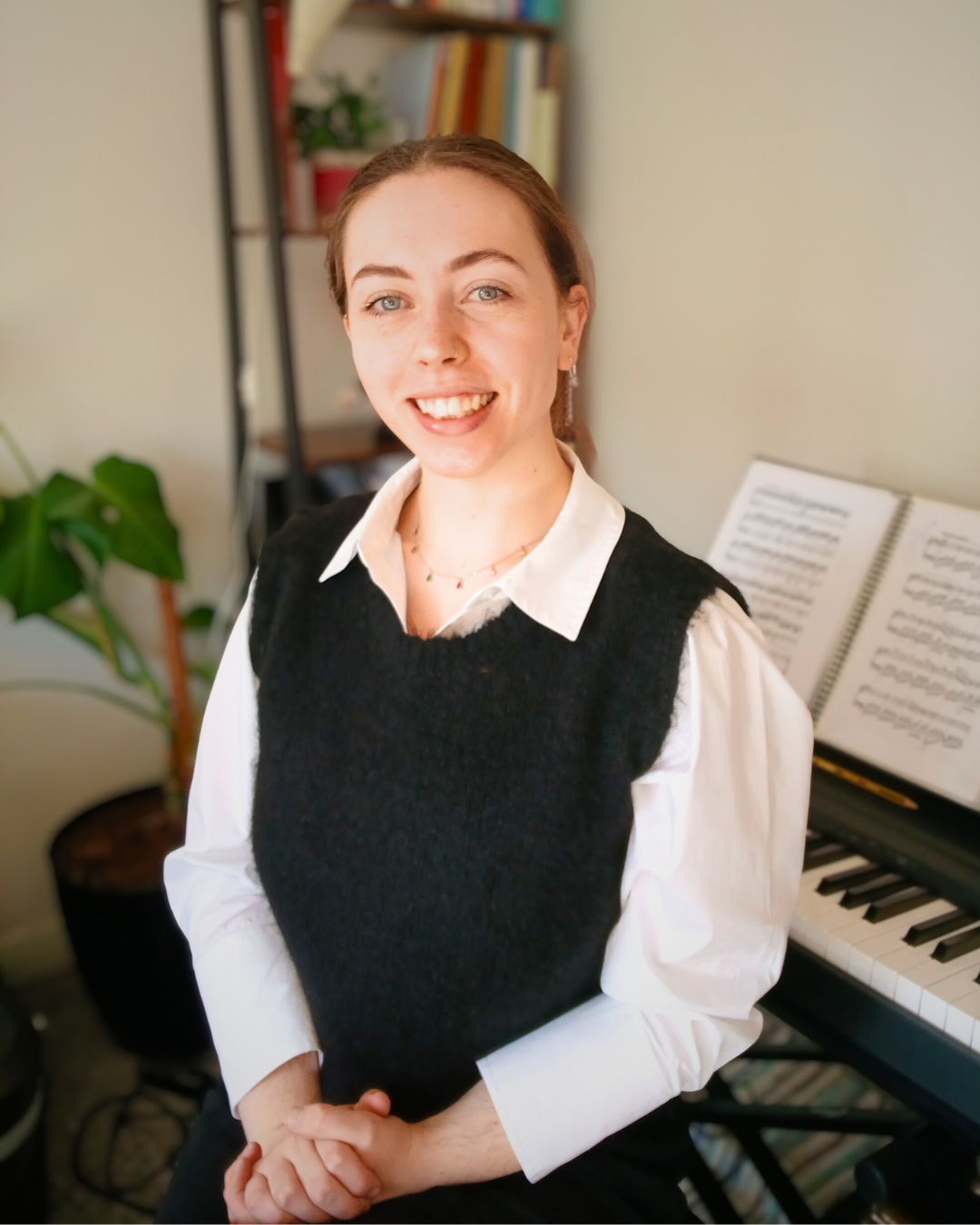
This article was written by Sally Proudman. Sally is a classical pianist, music tutor and founder of Red Squirrel Music, passionate about helping students understand music theory in a way that feels clear, relevant and encouraging.
