
Am I Too Old to Start Piano? A Reassuring Guide for Adult Beginners
If you have ever thought, ‘I’d love to learn piano, but surely I’m too old now,’ you are not alone.
Many adult beginners arrive at piano with a quiet mix of excitement and embarrassment. They might have wanted lessons as a child but never had the chance. They might have played a little years ago and forgotten almost everything. They might simply feel drawn to music now, but worry that everyone else started earlier and somehow ‘belongs’ more.
Here is the honest answer: you are not too old to start piano.
You do not need to have started at five. You do not need to read music fluently before your first lesson. You do not need to own a grand piano, know all your scales, or have a musical family. You just need curiosity, a little patience, and a way of learning that suits your life now.
Adult beginners are not ‘behin'd’
One of the most unhelpful ideas in music education is that there is a perfect age to begin.
Yes, children can learn quickly. They often have more free time, fewer inhibitions, and a natural willingness to repeat things without questioning them too much. But adults bring strengths too.
Adult learners usually understand why they are learning. They often listen carefully, ask thoughtful questions, and connect musical ideas to things they already know. They may be more self-conscious, but they are also more capable of understanding practice strategies, structure, and long-term progress.
You are not starting “late”. You are starting from where you are.
That is enough.
What makes adult piano lessons different?
Adult beginners often need a slightly different teaching approach from children.
You may want to understand how things work, not just be told what to do. You may want explanations of rhythm, notation, chords, practice methods, and how the keyboard is laid out. You may need lessons that fit around work, health, family, study, or a busy schedule.
You may also need a teacher who understands that confidence matters just as much as technique.
A good adult beginner lesson should not make you feel small. It should help you feel clearer, calmer, and more capable by the end than you did at the beginning.
At Red Squirrel Music, online piano lessons are designed to be friendly, practical, and low-pressure. The goal is not to judge what you do not know. The goal is to help you build from it.
Do I need to read music before starting?
No.
Reading music is a skill you can learn gradually. You do not need to arrive already fluent in notation.
In fact, many beginners find reading music much easier when it is connected directly to the keyboard. Instead of treating notes on the stave as abstract symbols, you can learn how they relate to patterns under your hands.
You may begin with simple melodies, rhythm patterns, keyboard geography, finger numbers, and basic note reading. Over time, these pieces start to join together. What once looked like a page of mysterious dots begins to look like musical information you can actually use.
That process does not happen overnight, but it does happen.
Do I need a piano?
You do not necessarily need an acoustic piano to begin.
A digital piano or keyboard can be enough for starting lessons, especially if it has full-sized keys and touch sensitivity. Ideally, you want something that responds to how firmly you press the keys, because this helps you learn control and expression.
For complete beginners, the most important thing is to have an instrument you can practise on regularly. It is better to begin with a sensible digital setup than to delay for months because you feel you need the perfect instrument first.
If you are unsure whether your current keyboard is suitable, a free taster session can help you check your setup before committing to lessons.
What if I am nervous?
Being nervous is normal.
Many adult beginners worry about making mistakes in front of someone else. Some apologise before they have even played a note. Some feel embarrassed that they do not know basic musical terms. Some are convinced they will be ‘the worst student ever’.
They are not.
A beginner lesson is not a performance. You are not expected to prove anything. You are there to learn.
The first lesson is usually about understanding your goals, checking where you are starting from, and giving you something manageable to work on. You should leave with a clearer sense of direction, not a list of reasons to feel bad about yourself.
Mistakes are not evidence that you are bad at music. They are part of the process.
How quickly will I improve?
Progress depends on your goals, your practice routine, your previous experience, and how much time you can realistically give to the instrument.
But you do not need hours of practice every day to make progress.
For many adult beginners, short and regular practice is more useful than occasional long sessions. Ten focused minutes on rhythm, note reading, or a small section of music can be much more effective than an unfocused hour of playing everything from the beginning.
The aim is to build a practice habit that fits your life, not one that collapses after a week because it was too ambitious.
In lessons, you can learn how to practise properly: what to repeat, what to listen for, when to slow down, how to fix mistakes, and how to avoid simply playing through pieces without improving them.
Why online lessons can work well for adult beginners
Online lessons can be especially helpful for adults because they remove many of the barriers that stop people starting.
You do not need to travel. You do not need to find the confidence to walk into a music school. You can learn from your own home, on your own instrument, in a familiar environment.
This can make lessons feel less intimidating. It also makes it easier to fit music around work, caring responsibilities, health, or unpredictable routines.
Online piano lessons still allow for real teaching: your teacher can listen, demonstrate, explain, guide your practice, and help you understand what to work on next. With a decent setup, they can be personal, focused, and effective.
What should I do before my first lesson?
Before your first lesson, you do not need to prepare anything impressive.
It helps to think about a few simple questions:
Why do you want to learn piano?
Have you played before, even briefly?
Do you want to read music, play for fun, work towards grades, or understand theory?
What instrument do you currently have?
How much time might you realistically practise each week?
Your answers do not need to be perfect. They simply help your teacher understand where to begin.
Starting is allowed to feel imperfect
A lot of adults wait for the ‘right time’ to begin.
They tell themselves they will start when work calms down, when they have bought a better keyboard, when they feel less embarrassed, when they have more energy, when they magically become the kind of person who practises every day.
But learning music does not require a perfect version of you.
It starts with the version of you that exists now.
You can be nervous and still begin. You can be busy and still learn. You can be a complete beginner and still belong in a music lesson.
Ready to try?
If you are curious about starting piano but not sure whether lessons are right for you, a free online taster session is a gentle first step.
In a taster, we can check your setup, talk through your goals, and work out what kind of lesson would suit you best.
Book a free online taster session with Red Squirrel Music and take the first step without pressure.
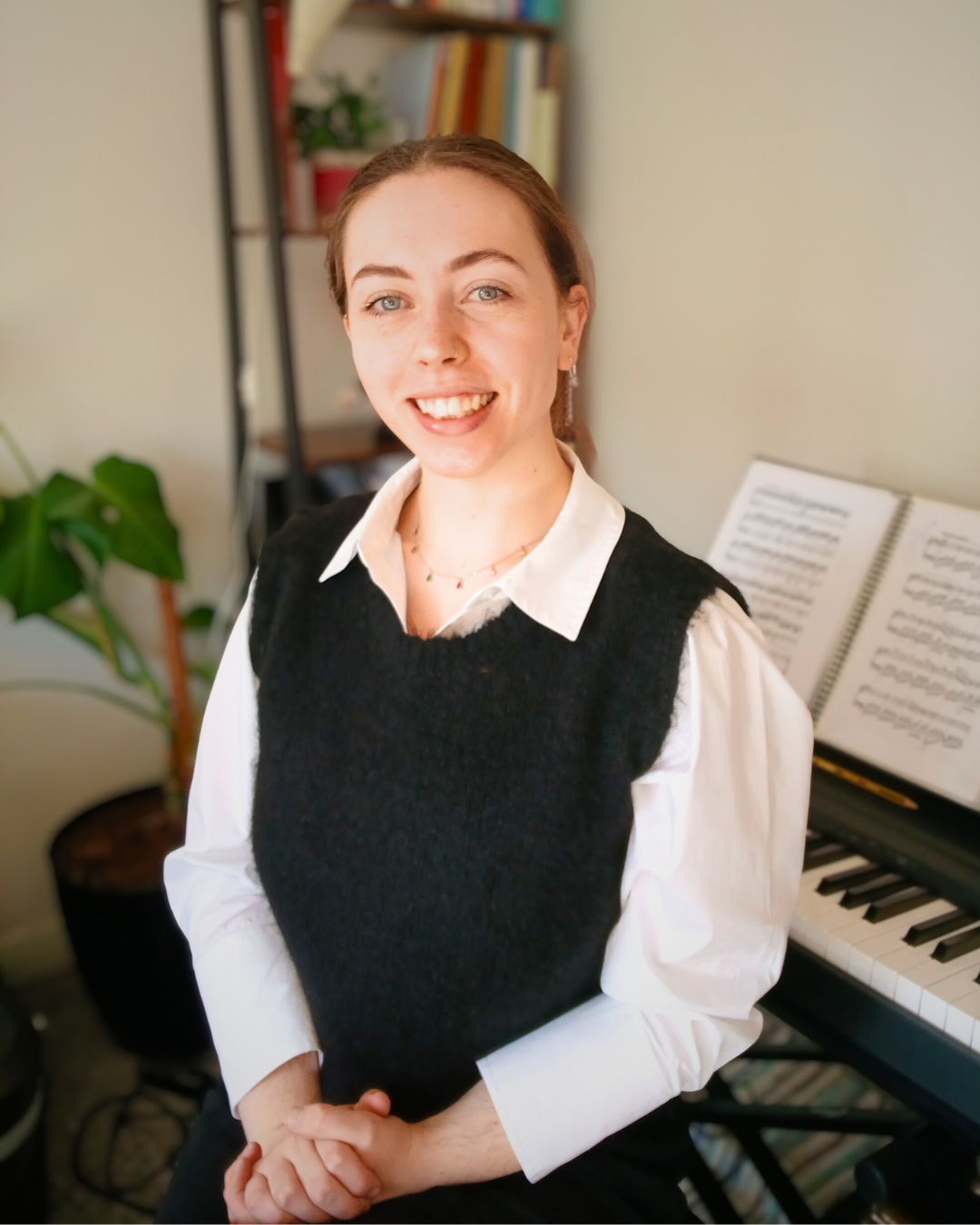
This article was written by Sally Proudman. Sally is a classical pianist, music tutor and founder of Red Squirrel Music, passionate about helping students understand music theory in a way that feels clear, relevant and encouraging.
